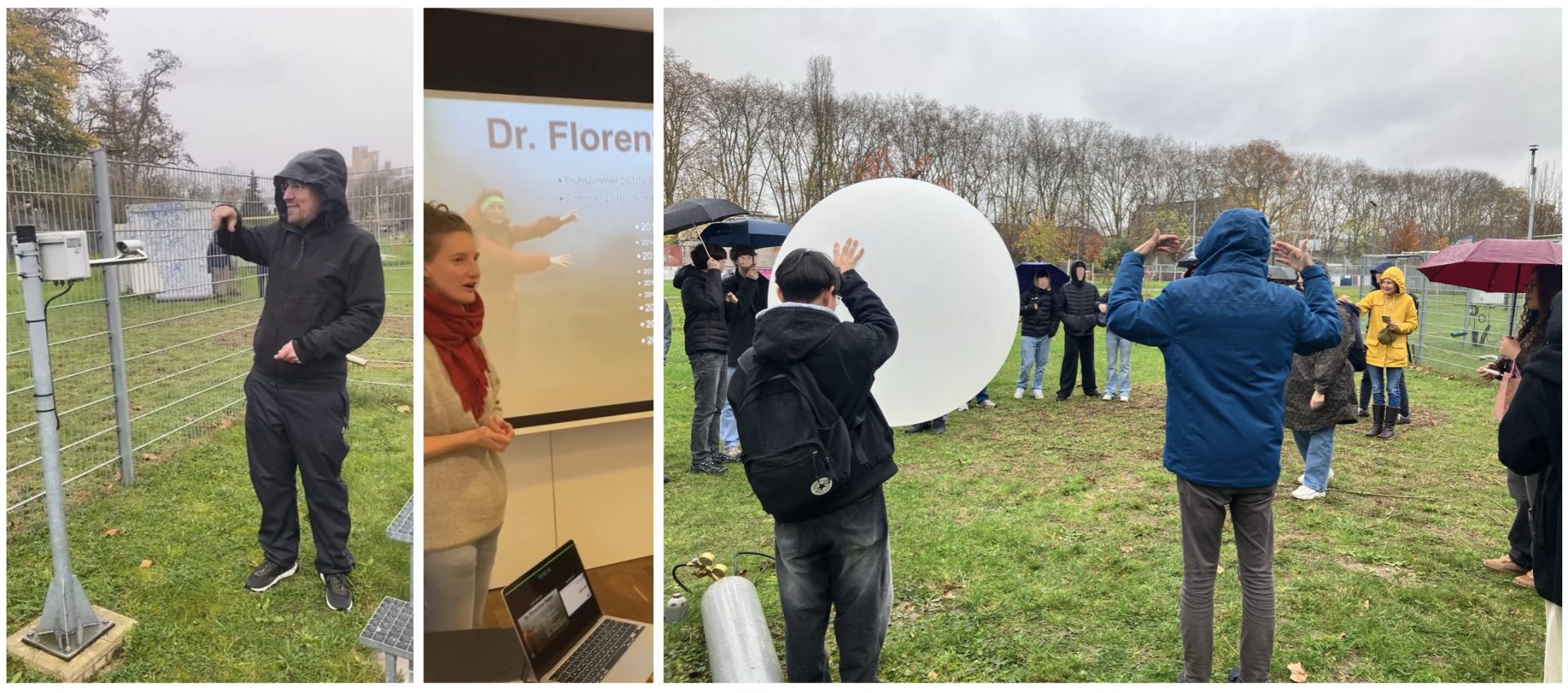
Science meets student curiosity – and the result was two days full of experimentation, questions, and hands-on climate exploration.
As part of the “Schule trifft Wissenschaft” programme, supported by the Sparkasse KölnBonn Stiftung Wissen, colleagues from Cologne and Jülich worked with students from the Bonns Fünfte comprehensive school to explore how climate research and machine learning shape our understanding of the Earth system.
The students explored current topics in environmental and climate science – not only what we know today, but how scientific knowledge is created and how it continues to evolve.
Using the carbon cycle as a starting point, they traced how geography, meteorology, and computer science connect to build models of the atmosphere and climate. The workshop was highly interactive: data were collected, analysed, questioned, and put into context.
[/et_pb_text][/et_pb_column][/et_pb_row][/et_pb_section][et_pb_section fb_built=”1″ theme_builder_area=”post_content” _builder_version=”4.27.4″ _module_preset=”default” da_is_popup=”off” da_exit_intent=”off” da_has_close=”on” da_alt_close=”off” da_dark_close=”off” da_not_modal=”on” da_is_singular=”off” da_with_loader=”off” da_has_shadow=”on” da_disable_devices=”off|off|off”][et_pb_row _builder_version=”4.27.4″ _module_preset=”default” theme_builder_area=”post_content”][et_pb_column _builder_version=”4.27.4″ _module_preset=”default” type=”4_4″ theme_builder_area=”post_content”][et_pb_image src=”https://cesoc-redesign.weckdesign.de/wp-content/uploads/2025/11/Algoearth_flyer_workshops_A4_20250903.pdfwp-content/uploads/2026/01/Screenshot-2026-01-14-at-23.05.09.pngwp-content/uploads/2025/11/Screenshot-2025-11-20-at-19.02.50.jpg” _builder_version=”4.27.4″ _module_preset=”default” theme_builder_area=”post_content” title_text=”Screenshot 2025-11-20 at 19.02.50″ hover_enabled=”0″ sticky_enabled=”0″][/et_pb_image][/et_pb_column][/et_pb_row][/et_pb_section][et_pb_section fb_built=”1″ theme_builder_area=”post_content” _builder_version=”4.27.4″ _module_preset=”default” da_is_popup=”off” da_exit_intent=”off” da_has_close=”on” da_alt_close=”off” da_dark_close=”off” da_not_modal=”on” da_is_singular=”off” da_with_loader=”off” da_has_shadow=”on” da_disable_devices=”off|off|off”][et_pb_row _builder_version=”4.27.4″ _module_preset=”default” theme_builder_area=”post_content”][et_pb_column _builder_version=”4.27.4″ _module_preset=”default” type=”4_4″ theme_builder_area=”post_content”][et_pb_text _builder_version=”4.27.4″ _module_preset=”default” theme_builder_area=”post_content” hover_enabled=”0″ sticky_enabled=”0″]
A highlight, despite rainy weather, was setting up a weather station on campus and launching a weather balloon, turning the schoolyard into a temporary research site. These measurements helped demonstrate how raw observations become weather models and how machine learning contributes to modern forecasting.
And something remarkable happened: over the course of the two days, the students transformed from curious observers into active participants. They challenged the researchers with thoughtful and forward-looking questions – questions about the future of climate science, technology, and our role in shaping change.
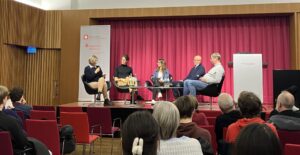
The programme concluded with a live panel discussion on “Machine learning as an opportunity for climate research,”giving students the chance to experience current scientific debate in real time.
A sincere thank you to everyone involved – and especially to the students, whose energy, curiosity, and sharp questions made these two days so memorable.
[/et_pb_text][/et_pb_column][/et_pb_row][/et_pb_section]